Read the instructions before the first session
Check whether the palm needs washing before use, whether any protective film must be removed and whether the product has particular preparation requirements. Do not assume that a routine from another model applies unchanged.
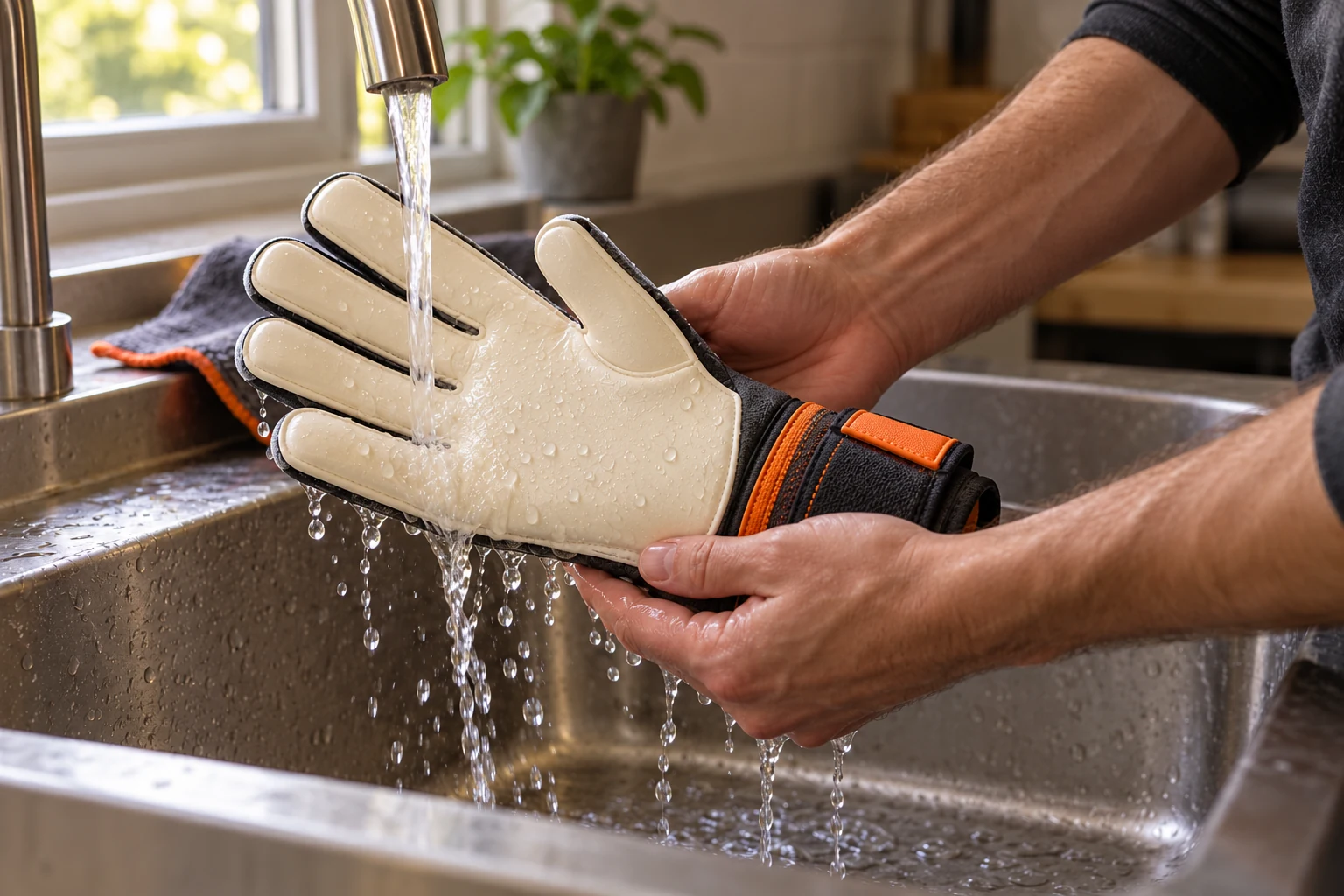
Reusch's published goalkeeper-glove guidance recommends washing the palm before first use and lightly moistening it before play. Its instructions also distinguish particular preparation for its Aqua products. That distinction is a reminder to follow the actual glove maker's guidance rather than copying a specialist instruction onto every pair.
Make the post-session routine easy to remember
Explain who is responsible for cleaning the gloves and where that can happen. At an academy, the keeper and family should receive the same instructions. Keep any care card short enough to consult after training, with a link to more detailed product guidance.
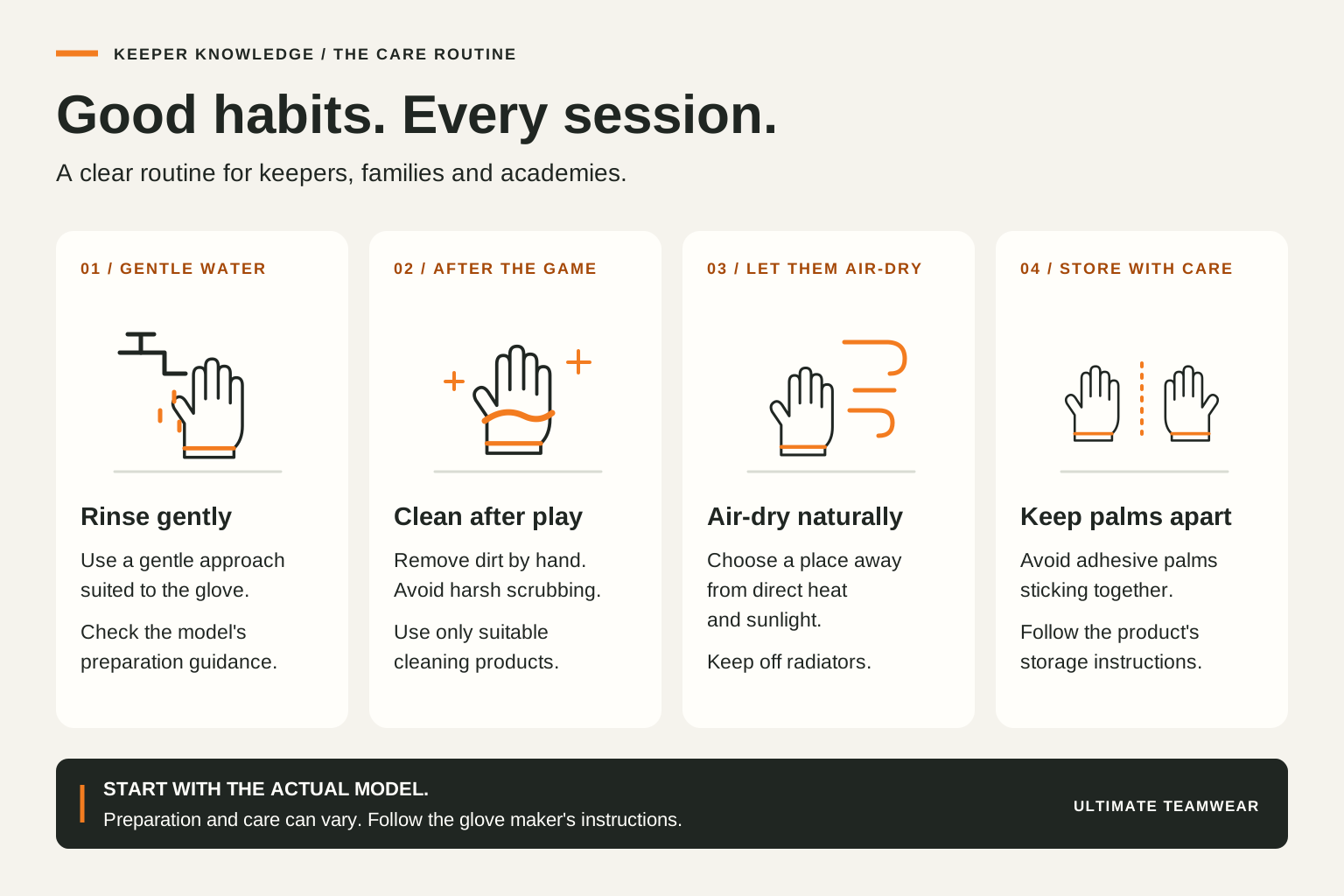
Reusch advises cleaning after use, avoiding washing machines and harsh detergents. uhlsport also recommends removing dirt from the palm and cleaning with hands rather than brushes. Use only methods and cleaning products suitable for the glove in question.
| Stage | Practical question | What your care information should explain |
|---|---|---|
| Before use | Does this model need preparation? | The manufacturer's specific instructions |
| After the session | How should dirt be removed? | Suitable cleaning method and products |
| Drying | Where should the gloves be left? | Air drying and heat precautions |
| Storage | How should the palms be separated? | Product-specific storage guidance |
Give drying and storage their own instructions
Both Reusch and uhlsport advise air drying away from direct heat and sunlight. Avoid telling players to accelerate drying on a radiator. uhlsport also warns about adhesive palms sticking together, so follow the product's instructions for keeping the surfaces separated.
Agree a practical place for the routine. If the only instruction is “look after your gloves,” different players will interpret it differently. A photograph or simple illustration of the recommended setup is often more useful than a long paragraph of general advice.
Record wear without making promises about lifespan
A glove's appearance after use needs context. Record the model, surface, frequency of use and care routine when discussing an issue with a supplier. Photographs taken under similar conditions can make changes easier to explain.
Avoid giving every player the same promised number of sessions or matches. Distinguish a visible change from a confirmed manufacturing defect, and discuss concerns against the agreed specification and applicable terms. Do not diagnose the cause from one photograph alone.
For academies and brands: make care part of the handover
Include the product name, where to find its instructions and who to contact with a question. Show the routine when equipment is issued, then make the information available afterwards. New joiners should receive the same explanation as the original group.
Review recurring questions and improve the card when something is unclear. A care guide should reflect the product being supplied; if the materials or construction change, review the instructions as part of the product update.
Put it into practice
Your next steps
- Use the actual model's preparation and care instructions.
- Explain cleaning, drying and storage as separate steps.
- Keep the same information available to players, families and coaches.
- Record use and care context when raising a product concern.
Developing an academy or retail glove range? Discuss product information and finishing details with Ultimate Teamwear.
Discuss your project