Start with the specification, then compare prices
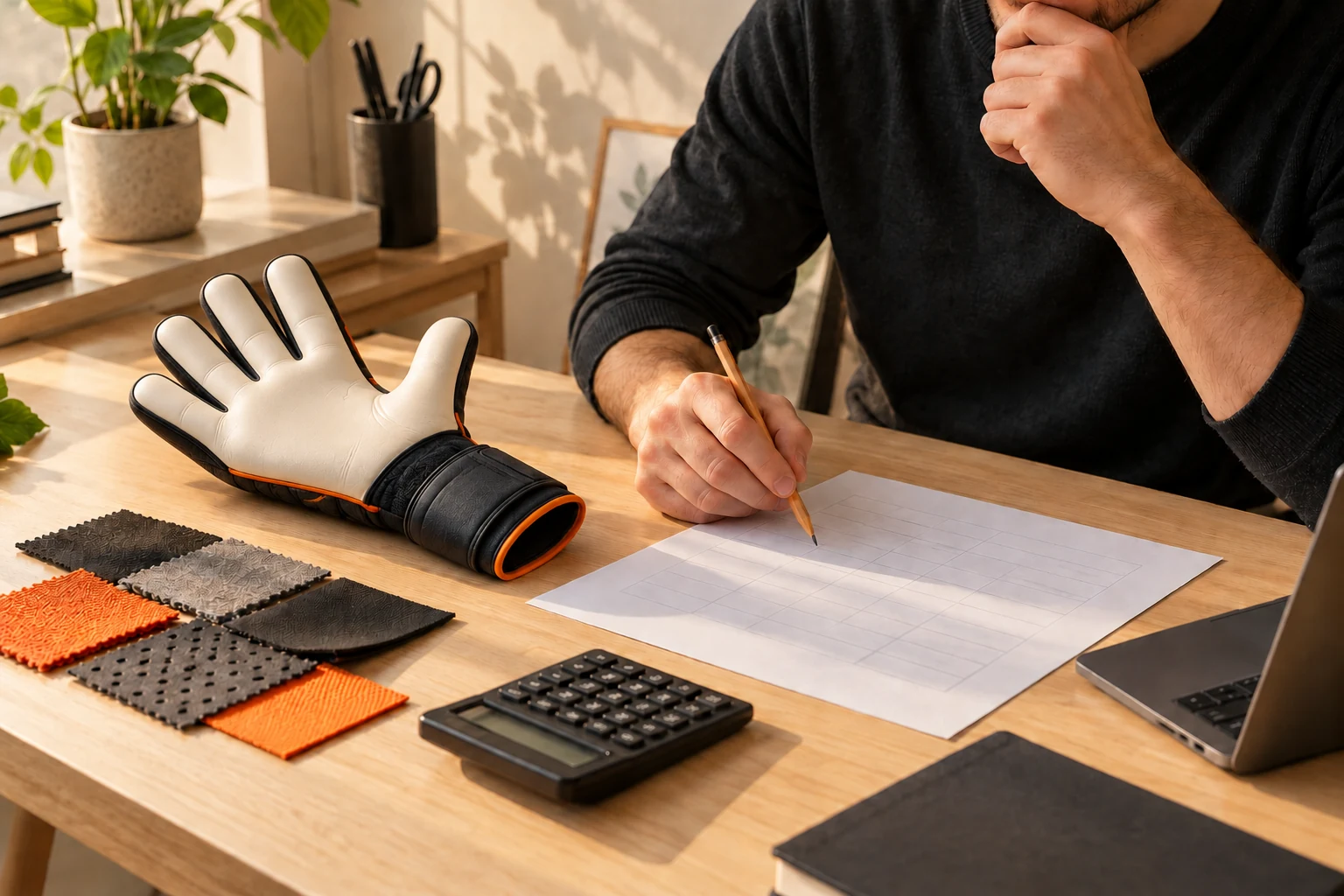
Two gloves with similar colours can carry different costs. The palm material, cut, backhand construction, cuff, size range and branding method all affect the brief. A useful quotation identifies those choices so you can compare the same product across quantities.
Write down the intended keeper and use before asking for a number. An academy training programme and a retail launch may need different size allocations, packaging and sample checks. Ask for a written specification, an agreed quantity and a quote validity date.
What can the product subtotal look like?
The following figures are illustrative planning scenarios based on example order levels. They are not a live price list or a commitment to supply every design at these prices. Your written quotation depends on the approved design, materials, size range and order details. All figures here are in US dollars.
The example minimum starts at 30 pairs of one design. A lower unit price at a larger quantity can still mean much more cash committed to stock. Compare total investment and likely sell-through before choosing the larger batch.
| Planning scenario | Illustrative unit cost | Product subtotal |
|---|---|---|
| 30 pairs of one design | $20 | $600 |
| 200 pairs of one design | $16 | $3,200 |
| 500 pairs of one design | $16 | $8,000 |
Allow for samples and tooling separately
An illustrative development allowance for two to four sample pairs is about $160–270 where the quoted package includes sample courier charges and an agreed mould setup. Scope changes can change that allowance. Ask for the breakdown: sample quantity, sizes, construction, tooling, delivery and the cost of revisions.
Moulded or embossed details can require a one-time tooling charge. A planning range of $30–100 per design and size is a starting point for discussion, not a universal fee. Silicone print and sublimation options can avoid that particular mould requirement. Confirm the proposed method before treating any setup cost as final.
Do not count the same tooling charge twice. If it is already included in your sample package, identify which mould and size it covers and whether any additional production sizes require more tooling.
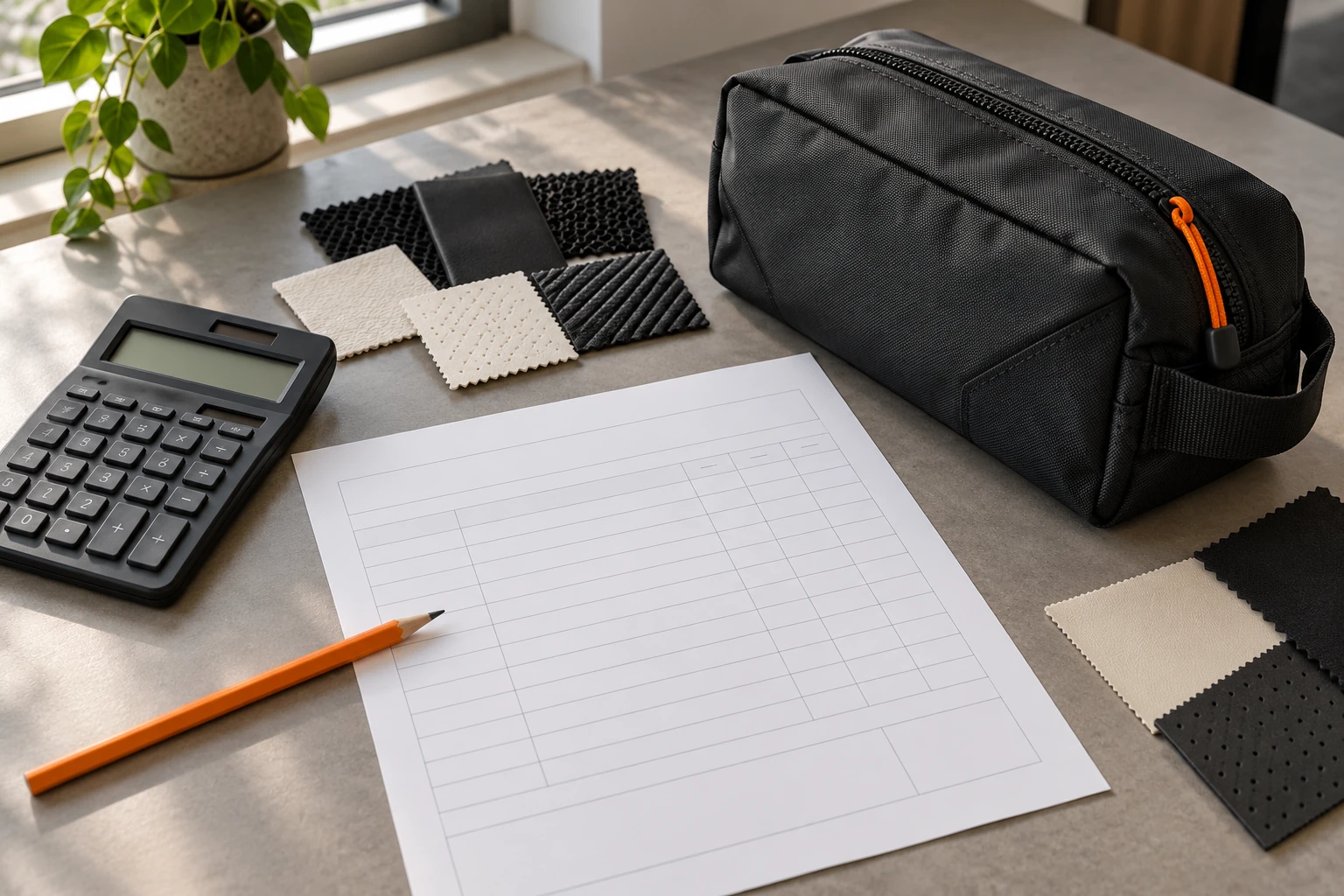
Build a complete order-cost worksheet
Shipping is quoted separately because the route, destination, shipment details and carrier charges can change. Request the delivery basis in writing, including what is and is not included in the shipping amount. A product subtotal alone is not a landed-cost calculation.
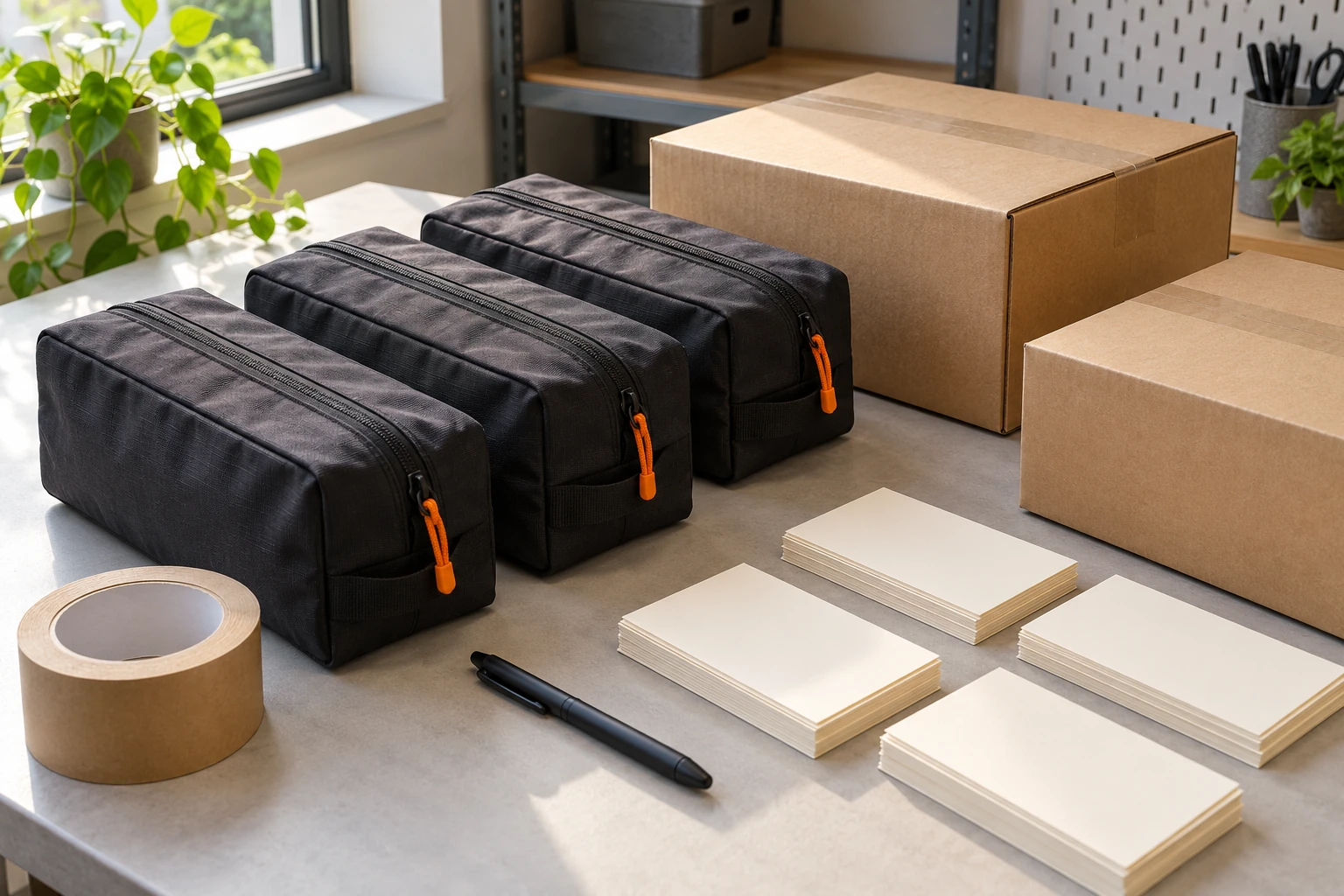
A glove bag may be included in the agreed specification; custom labels, tags, keyrings or special packaging should still be itemised. An attractive accessory can add value, but it also needs an approved quantity, artwork and cost.
| Budget line | What to confirm |
|---|---|
| Product subtotal | Approved pairs × quoted unit price |
| Development | Sample pairs, revisions and courier |
| Tooling | Design, sizes covered and reuse conditions |
| Packaging and extras | Included bag versus separately quoted additions |
| Delivery and import costs | Destination, shipping terms and excluded charges |
| Contingency | A cash allowance for changes or unexpected costs |
Convert order costs into a useful per-pair figure
For a simple example, assume 30 pairs cost $600, separately quoted delivery costs $120 and development costs $180. That is $900 paid across those example lines, or $30 per pair when all development is allocated to this first batch. The assumptions are invented for this calculation; $120 is not a shipping quote.
If a later identical order can reuse the approved development and tooling, its cost structure may differ. Keep the first-batch calculation visible rather than quietly spreading setup over sales you have not made. Divide by the number of saleable pairs expected, and keep an allowance for samples you plan to give away.
The retail price does not tell you the profit
After stock arrives, you may still pay for fulfilment, payment processing, shipping to the customer, returns and marketing. Subtract those variable selling costs from net sales revenue and product cost to understand contribution toward your fixed expenses.
For example, $60 of net revenue less $30 allocated product cost and $12 of variable selling costs leaves $18 toward fixed expenses and profit. It does not establish a guaranteed margin. Test what happens if you discount by $10, spend more to acquire a buyer or sell the slow sizes later than expected.
Send a brief that produces a clearer quote
A useful enquiry helps the manufacturer price the product you actually want. Send a reference direction and explain which details are essential and which are flexible. If you are still deciding, request two clearly specified options rather than one vague “best price”.
- State your quantity per design and intended size split.
- Choose the palm, cut, backhand and cuff direction, or ask for guidance.
- Describe the logo application and any finger-protection requirement.
- List the packaging and accessories you need.
- Give the delivery country and postcode, target timing and sample requirements.
- Ask for separate product, development and shipping lines.
Put it into practice
Your next steps
- Compare like-for-like specifications, not just prices per pair.
- Keep samples, tooling and delivery visible in the budget.
- Use larger quantities only when demand and cash support them.
- Calculate selling costs before deciding on a retail margin.
Want a cost breakdown for your own design? Share your quantity, size range, material direction and delivery country. We will help turn the brief into a written quotation.
Discuss your project